How to Support Healthy Habits Without Singling Kids Out
Published October 21, 2021 | Last Updated April 9, 2026

Kids notice everything: who gets seconds, who “needs” more exercise, whose lunch is commented on, whose isn’t. Even when you’re trying to help, it’s easy for one child to feel like the child with “the problem.”
Your goal is simple: support healthy habits without singling kids out. When you shift the focus from one child’s body to the whole family’s well-being, you protect kids’ confidence and their relationship with food and movement.
Why Singling a Child Out Hurts
You might be worried about a child’s health, weight, energy, or eating habits. That concern is real and valid.
The problem isn’t the concern.
The problem is how it shows up.
Things that can make a child feel singled out:
- Different food rules for one child
- Extra pressure to “move more” or “make better choices”
- Comments like “Do you really need more?” or “You don’t need dessert.”
- Jokes or “teasing” about their size, appetite, or clothing
Kids tend to hear: “My body is wrong. I need to be fixed.”
That shame can lead to hiding food, ignoring hunger and fullness cues, or disconnecting from their body altogether. It can also increase the risk of disordered eating, not decrease it.

Make Health a Family Thing, Not a “You” Thing
Instead of building new rules around one child, zoom out. Ask: “If this is really about health, can we do it together?”
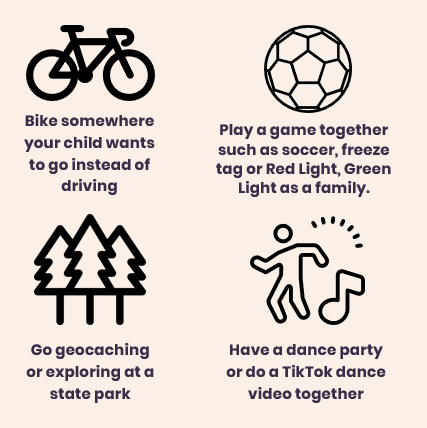
Find activities the whole family can enjoy together that are focused on enjoying the activity, not weight loss or changes to mealtime.
Build healthier habits
- Everyone has a family walk after dinner.
- Everyone keeps screens out of bedrooms.
- Everyone has a regular snack after school.
Keep a neutral food structure
- You decide what and when food is offered.
- Kids decide if and how much they eat from what’s offered.
Focus on how bodies feel, not how they look
- Energy, sleep, focus, mood, strength, and joy are all health markers, too.
For more background on why weight-focused talk can backfire, read What Is Weight Talk.
If you do decide to make changes to build healthier habits, make these changes as a whole family.
Everyday Language Shifts That Help All Kids
Small changes in what you say can make a big difference in how kids feel.
Here are some easy language swaps you can use with any child, in any body:
Around meals and snacks
Instead of: “Do you really need seconds?”
Say: “Is your body telling you you’re still hungry?”
Instead of: “No more sugar for you; it’s bad for you.”
Say: “That’s all the candy for tonight. We can have more another day.”
Instead of: “You don’t need dessert.”
Say: “Dessert is part of dinner tonight. We’re all having some.”
Around movement
Instead of: “You should exercise more.”
Say: “Let’s find a way to move today that feels fun for you.”
Instead of: “We need to work off those calories.”
Say: “Moving our bodies can help our brains and bodies feel good.”
Around bodies
Instead of: “That shirt is too tight; it doesn’t look good.”
Say: “How does that shirt feel when you sit and move around?”
Instead of: “You look so skinny/fit now!”
Say: “You seem so happy lately. I love seeing you enjoy yourself.”
For more ready-to-use phrases, explore What to Say Instead.
You Don’t Have to Get This Perfect
If you’re realizing you’ve singled a child out before, you’re not alone. Most adults grew up with weight-focused messages. You’re already doing something powerful by noticing and trying something different now.
Every time you…
- Apply the same guidance to all kids,
- Talk about how bodies feel instead of how they look,
- And speak about food and movement without shame,
…you’re helping kids build a healthier relationship with their bodies and with food.
Learn What to Say to Help Kids Feel Good
Want more simple phrases and practical tips you can use right away?
Download our free resource, 7 Guiding Principles: How to Prevent Eating Disorders & Inspire Well-Being in Kids, and learn how to support healthy habits without singling kids out or focusing on weight.
Sign up for Tip of the Month for free, practical guidance delivered right to your inbox every month.

Related Articles