What to Say Schools
Build a Body-Healthy School Culture
Schools are one of the most powerful places to reduce the risk of eating disorders and one of the earliest places to notice when something is wrong. Get practical tools to prevent and respond to food and body issues in students.

What to Say Schools is proudly sponsored by Minnwest Bank.

What to Say for Schools
Most students spend most of their waking hours in your care.
Schools are one of the most powerful places to reduce the risk of eating disorders — and one of the earliest places to notice when something is wrong.
This isn’t about adding a curriculum. It’s about what the adults in the building say, and don’t say, in a hundred small moments a day. These “hundred small moments” are what add up to significantly impact each student’s perception of their body’s appearance and how they relate to food.
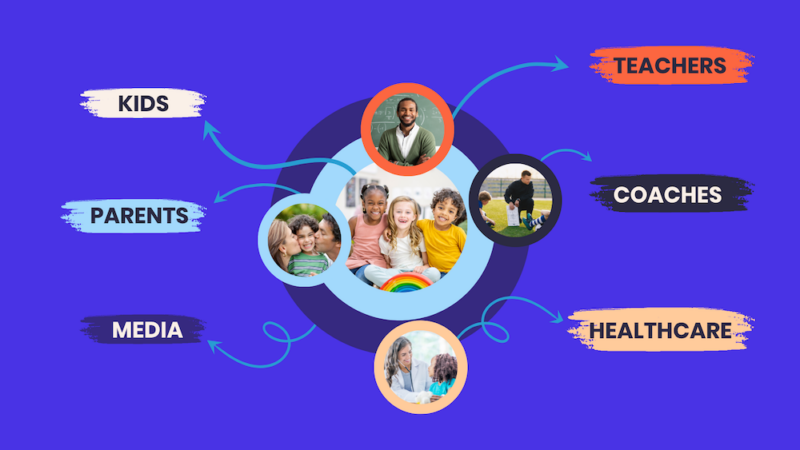
What Adults Say vs. What a Young Person Hears
Young people don’t separate a comment about their body from a comment about themselves.
For a young person, they are their body.
Commonly said: “You look great!”
What a young person hears: I am being measured. My appearance determines how others value me.
Commonly said: “You’re at a healthy weight”
What a young person hears: Who I am is healthy BECAUSE of how my body looks.
Commonly said: Praise for being thin
What a young person hears: I’m valued for my weight. When weight shifts — as it will — it feels like falling outside what the pack values.
This is why even approving comments can be harmful. They teach young people that belonging is contingent on how they look.
Quick Start
3 Simple Shifts
The three norms for adults to embrace to promote health and wellbeing – and reduce risk:

1. No body appearance talk

2. No food judgment — positive or negative
3. Shared responsibility
What to Say Instead
Instead of: “You look great!”
Try: “I’m glad you’re here.” / “It’s great to see you.”
Instead of: “I’m being bad today / I’ll work it off.”
Try: Say nothing. You don’t have to earn food.
Instead of: “You look great!” when a student says “I’m fat.”
Try: “I’m hearing discomfort. How are you doing? I’d love to listen.”
The full toolkit includes more than a dozen swaps, plus scripts for the harder moments — a student skipping lunch, a comment in the locker room, an athlete talking about “working off” food.
What to Say for Schools
What's in the full District Toolkit?
- Sample wellness policy language ready to insert into your Local School Wellness Policy — purpose, standards, implementation requirements, prohibited practices, and monitoring
- A district-wide resource for all staff — the core principles, the norms, the full language swap table, and how to run a private check-in
- Resources for Role-specific guidance for school leaders, nurses, counselors, psychologists, social workers, coaches, cafeteria and food service staff, and teachers
- Student handbook language you can adopt directly
- A parent and caregiver email template plus a take-home resource on what to do if they’re concerned
- An implementation checklist for building your district’s referral pathway
Built by WithAll, a national organization equipping busy adults with simple, actionable ways to talk with young people about food and bodies.
Get the Toolkit Now
WithAll Resource Download: What to Say Schools Toolkit
Even positive intent can result in harmful impact
It does not matter whether we believe what we’re saying about a body’s appearance is neutral, or kind, or a compliment.
Young people are not developmentally able to separate your intention from your impact.
When a trusted adult comments on their body, what a young person hears is: my body is being evaluated.
Let’s stop teaching kids that body appearance is for public evaluation/feedback.

Our Impact
-
 "This was an incredibly helpful resource. I’ve encouraged all providers at my practice to take the course. I hope we can shift our approach—starting by no longer focusing conversations around patients’ weights during routine physicals. It’s a small but important step toward changing the culture around growing bodies in pediatrics.”What to Say Healthcare Participant
 -
 "Each week, your webinar gives me more than guidance on what to say—it helps me understand how to change deep-rooted patterns of low self-worth and body image. It also makes me feel less alone, having a community that tries to wrap their heads around these issues means a lot to me, too."What to Say For Me Participant
 -
 "WithAll's What to Say resources have helped me lay important groundwork for my kids to build and maintain healthy relationships with their bodies and food. I have become so aware of how people in our family and circle of friends talk about their own bodies in front of my children. I'm much more likely to chime in with points I have learned from WithAll. I'm trying to create a healthy space for my kids to develop and learn about their bodies, food, and the world they are in."What to Say Coaches Participant

Stay Connected
Join us on social for practical tips to support your child's positive relationship with food and body.